ǶƵ

Healthcare News & Views

New Stanford Prehab Study Highlights High Patient Activation & Engagement Rates with ǶƵ

December 20, 2021
By
seamless

Since 2017, Stanford Health Care has partnered with ǶƵ on a number of initiatives, including the Colorectal Surgery program studying the use of ǶƵ to deliver Prehabilitation. Prior to surgery, patients at Stanford are enrolled into a “” program – a preoperative program dedicated to helping patients thrive after surgery via proven preparation protocols such as breathing exercises, mindset training and diet regimen. Recently, the Colorectal team at Stanford published a study revealing “.” The study, published in the Journal of Gastrointestinal Surgery, examines whether existing health beliefs are associated with engagement and adherence in a home-based online prehabilitation program.


Patients undergoing abdominal colorectal operations were enrolled in ǶƵ so they could receive specific nutrition and exercise education. Using ǶƵ, the team also tracked the patient’s baseline health beliefs and mindsets, daily exercises, and weekly diet recalls. The team used multivariable binary logistic regression to predict engagement, multivariable ordinary least squares regression to predict diet adherence, and generalized linear models with a binomial distribution to predict engagement and exercise adherence.

Here are the key results from the study:

  • 227 patients enrolled into ǶƵ
  • 75% patients activated & 75% patients “used” the program
  • Engagement with the program was unrelated to health beliefs or mindsets
  • Positive diet-related health beliefs and a growth mindset were associated with positive diet behaviors and inversely associated with negative diet behaviors
  • Exercise-related health beliefs and mindsets were not associated with exercise adherence

Check out the full study in the Journal of Gastrointestinal Surgery.

New Stanford Prehab Study Highlights High Patient Activation & Engagement Rates with ǶƵ

Posted by:
seamless
on
December 20, 2021

Since 2017, Stanford Health Care has partnered with ǶƵ on a number of initiatives, including the Colorectal Surgery program studying the use of ǶƵ to deliver Prehabilitation. Prior to surgery, patients at Stanford are enrolled into a “” program – a preoperative program dedicated to helping patients thrive after surgery via proven preparation protocols such as breathing exercises, mindset training and diet regimen. Recently, the Colorectal team at Stanford published a study revealing “.” The study, published in the Journal of Gastrointestinal Surgery, examines whether existing health beliefs are associated with engagement and adherence in a home-based online prehabilitation program.


Patients undergoing abdominal colorectal operations were enrolled in ǶƵ so they could receive specific nutrition and exercise education. Using ǶƵ, the team also tracked the patient’s baseline health beliefs and mindsets, daily exercises, and weekly diet recalls. The team used multivariable binary logistic regression to predict engagement, multivariable ordinary least squares regression to predict diet adherence, and generalized linear models with a binomial distribution to predict engagement and exercise adherence.

Here are the key results from the study:

  • 227 patients enrolled into ǶƵ
  • 75% patients activated & 75% patients “used” the program
  • Engagement with the program was unrelated to health beliefs or mindsets
  • Positive diet-related health beliefs and a growth mindset were associated with positive diet behaviors and inversely associated with negative diet behaviors
  • Exercise-related health beliefs and mindsets were not associated with exercise adherence

Check out the full study in the Journal of Gastrointestinal Surgery.

Recent news from ǶƵ

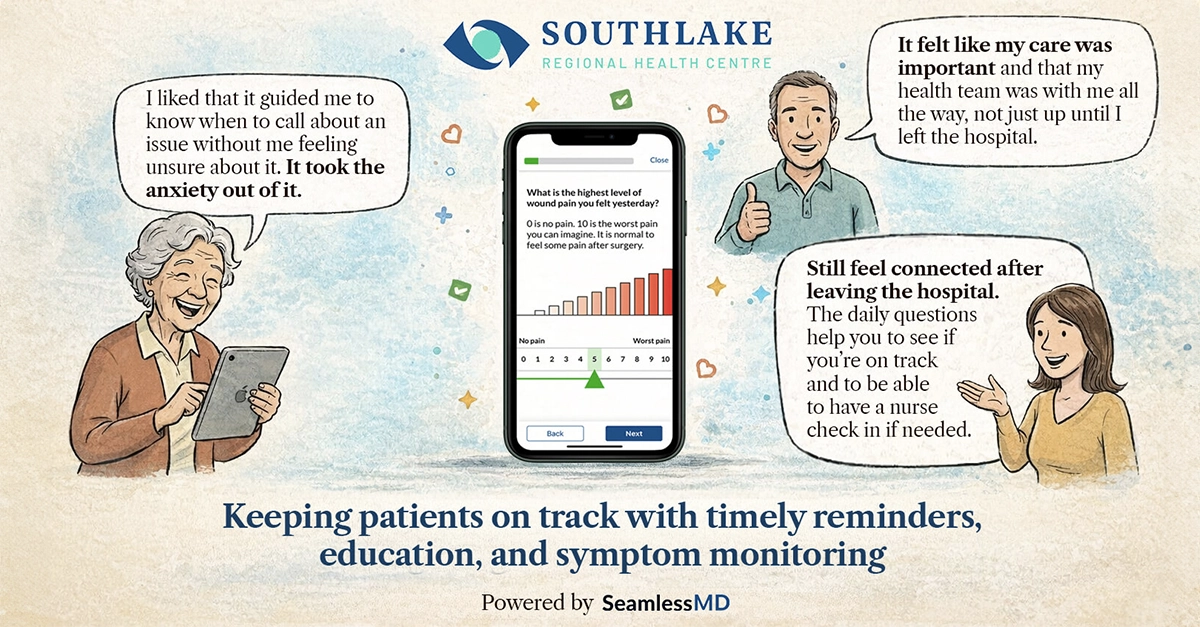
Innovation Spotlight Series: How Southlake Health Is Advancing Patient-Centered Orthopedic Care Through Digital Innovation
January 15, 2026

Innovation Spotlight Series: How Southlake Health Is Advancing Patient-Centered Orthopedic Care Through Digital Innovation

Learn More
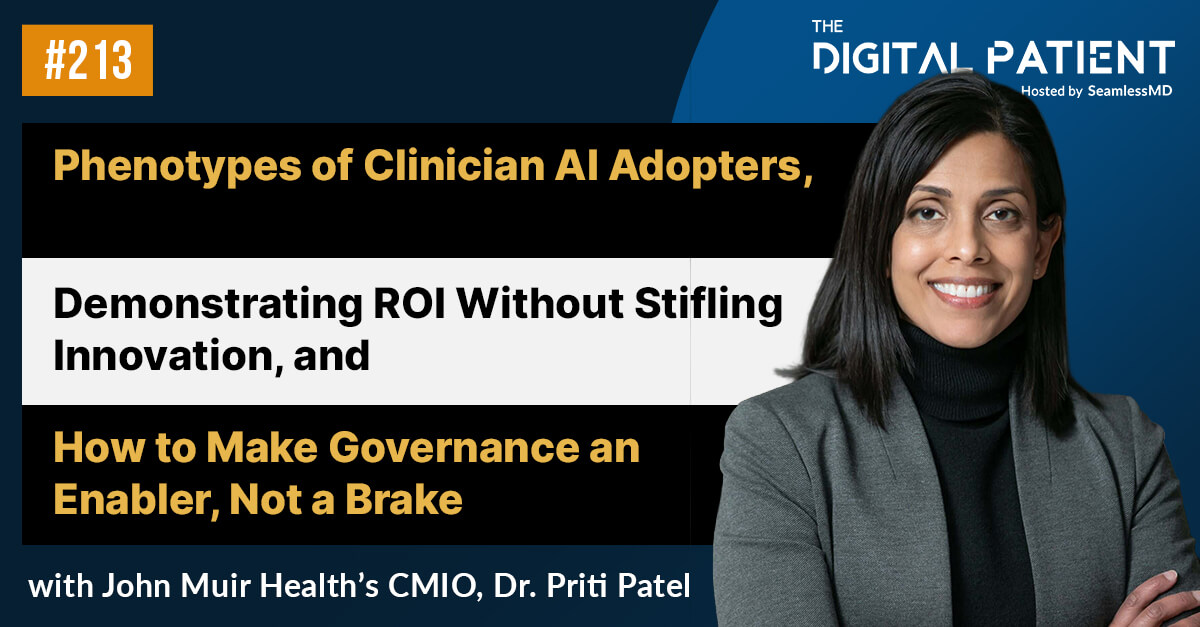
TDP 213: John Muir Health’s CMIO Dr. Priti Patel: Phenotypes of Clinician AI Adopters, Demonstrating ROI Without Stifling Innovation, and How to Make Governance an Enabler, Not a Brake
January 15, 2026

TDP 213: John Muir Health’s CMIO Dr. Priti Patel: Phenotypes of Clinician AI Adopters, Demonstrating ROI Without Stifling Innovation, and How to Make Governance an Enabler, Not a Brake

Learn More
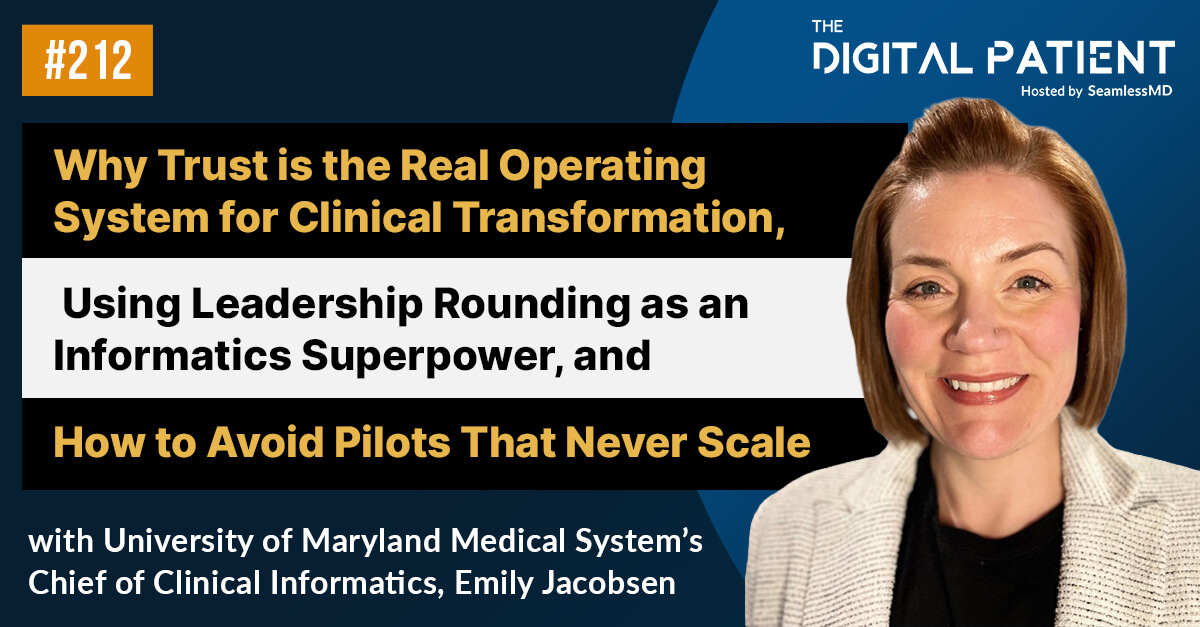
TDP 212: UMMS’ Emily Jacobsen: Why Trust is the Real Operating System for Clinical Transformation, Using Leadership Rounding as an Informatics Superpower, and How to Avoid Pilots That Never Scale
January 13, 2026

TDP 212: UMMS’ Emily Jacobsen: Why Trust is the Real Operating System for Clinical Transformation, Using Leadership Rounding as an Informatics Superpower, and How to Avoid Pilots That Never Scale

Learn More