ǶƵ

Healthcare News & Views

New UAB Study Finds Use of Patient Engagement Technology Varies By Patient Demographics

July 27, 2021
By
seamless

This study on the “,” published in the Annals of Surgery by Lauren Theiss, M.D. discusses the association of patient-level characteristics on the use of patient engagement technology during the perioperative period. ǶƵ is an example of a digital patient engagement platform that guides patients from pre-surgery preparation through post-surgery recovery using their own devices (e.g. smartphone, tablet, computer). 

Here is an excerpt from summarizing UAB’s results examining disparities in perioperative use of ǶƵ:

As patient engagement technologies are increasingly used, it remains unclear who uses, and does not use, these technologies. So, the team of researchers conducted a retrospective cohort study of patients undergoing elective colorectal surgery who enrolled in a patient engagement technology at UAB. Ultimately, the study suggests that patient use of a patient engagement technology around surgery differs significantly by patient sex, race/ethnicity, and insurance status. Specifically, male patients, patients who are not privately insured, and Black patients were less likely to activate and use the technology.

These results reveal the importance of addressing the disparities in patient-level characteristics prior to the implementation of such technologies. Determining the root causes of low adoption rates amongst the specified populations can help healthcare providers and patients receive the full benefit of patient engagement technology, leading to the desired surgical outcomes. 

New UAB Study Finds Use of Patient Engagement Technology Varies By Patient Demographics

Posted by:
seamless
on
July 27, 2021

This study on the “,” published in the Annals of Surgery by Lauren Theiss, M.D. discusses the association of patient-level characteristics on the use of patient engagement technology during the perioperative period. ǶƵ is an example of a digital patient engagement platform that guides patients from pre-surgery preparation through post-surgery recovery using their own devices (e.g. smartphone, tablet, computer). 

Here is an excerpt from summarizing UAB’s results examining disparities in perioperative use of ǶƵ:

As patient engagement technologies are increasingly used, it remains unclear who uses, and does not use, these technologies. So, the team of researchers conducted a retrospective cohort study of patients undergoing elective colorectal surgery who enrolled in a patient engagement technology at UAB. Ultimately, the study suggests that patient use of a patient engagement technology around surgery differs significantly by patient sex, race/ethnicity, and insurance status. Specifically, male patients, patients who are not privately insured, and Black patients were less likely to activate and use the technology.

These results reveal the importance of addressing the disparities in patient-level characteristics prior to the implementation of such technologies. Determining the root causes of low adoption rates amongst the specified populations can help healthcare providers and patients receive the full benefit of patient engagement technology, leading to the desired surgical outcomes. 

Recent news from ǶƵ

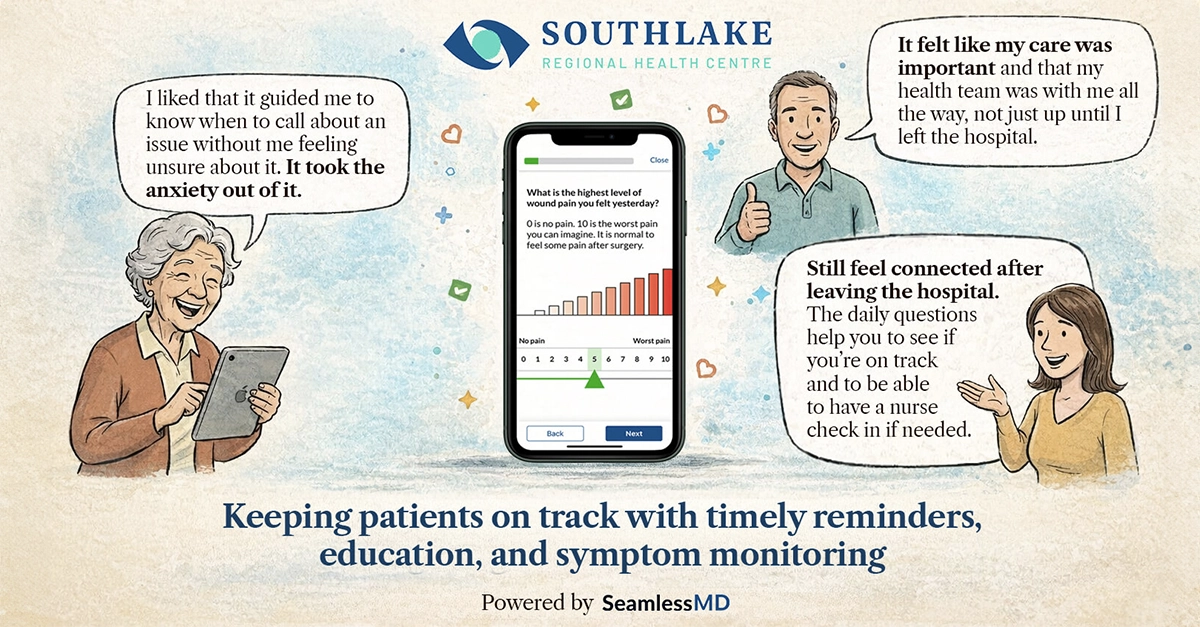
Innovation Spotlight Series: How Southlake Health Is Advancing Patient-Centered Orthopedic Care Through Digital Innovation
January 15, 2026

Innovation Spotlight Series: How Southlake Health Is Advancing Patient-Centered Orthopedic Care Through Digital Innovation

Learn More
TDP 213: John Muir Health’s CMIO Dr. Priti Patel: Phenotypes of Clinician AI Adopters, Demonstrating ROI Without Stifling Innovation, and How to Make Governance an Enabler, Not a Brake
January 15, 2026

TDP 213: John Muir Health’s CMIO Dr. Priti Patel: Phenotypes of Clinician AI Adopters, Demonstrating ROI Without Stifling Innovation, and How to Make Governance an Enabler, Not a Brake

Learn More
TDP 212: UMMS’ Emily Jacobsen: Why Trust is the Real Operating System for Clinical Transformation, Using Leadership Rounding as an Informatics Superpower, and How to Avoid Pilots That Never Scale
January 13, 2026

TDP 212: UMMS’ Emily Jacobsen: Why Trust is the Real Operating System for Clinical Transformation, Using Leadership Rounding as an Informatics Superpower, and How to Avoid Pilots That Never Scale

Learn More